- Your cart is empty
- Continue Shopping

what is ahk cu peptide
- About Peptides
- Posted on
-
by admin
- 0 comments
Understanding the intersection of biochemistry and dermatology is essential for navigating the complex market of anti-aging and hair restoration treatments. One molecule that has garnered significant scientific interest is the AHK-Cu peptide. Often overshadowed by its more famous relative, GHK-Cu, this specific copper-binding tripeptide offers unique advantages for cellular signaling and tissue repair. When consumers and researchers ask, what is ahk cu peptide, they are inquiring about a specific sequence of amino acids—Alanine, Histidine, and Lysine—complexed with copper, which plays a pivotal role in the health of the scalp and the structural integrity of the skin.
Understanding the Science of AHK-Cu Peptide for Hair and Skin
In the realm of regenerative medicine, what is ahk cu peptide serves as a fundamental question for those targeting androgenetic alopecia and skin thinning. This tripeptide acts as a biological messenger, facilitating the delivery of copper to specific cell types, most notably dermal papilla cells and fibroblasts. Copper is a vital cofactor for several enzymes, including lysyl oxidase, which is responsible for the cross-linking of collagen and elastin. By providing a stabilized vehicle for copper, AHK-Cu enhances the regenerative capacity of tissues that have undergone oxidative stress or age-related decline.
The Molecular Structure of AHK-Cu
The chemical nomenclature of AHK-Cu is L-Alanyl-L-Histidyl-L-Lysine-Cu2+. This sequence of three amino acids—Alanine, Histidine, and Lysine—is specifically designed to bind to a copper ion (Cu2+) with high affinity. This stability is crucial because free copper can be pro-oxidative and harmful to cells if not properly sequestered by a carrier peptide.
The inclusion of Alanine at the N-terminus distinguishes AHK-Cu from other copper peptides. This specific configuration allows the molecule to penetrate the follicular epithelium more effectively than larger complexes. Once the copper is delivered to the intracellular environment, it supports the function of enzymes involved in energy metabolism and antioxidant defense.
Mechanisms in Hair Follicle Stimulation
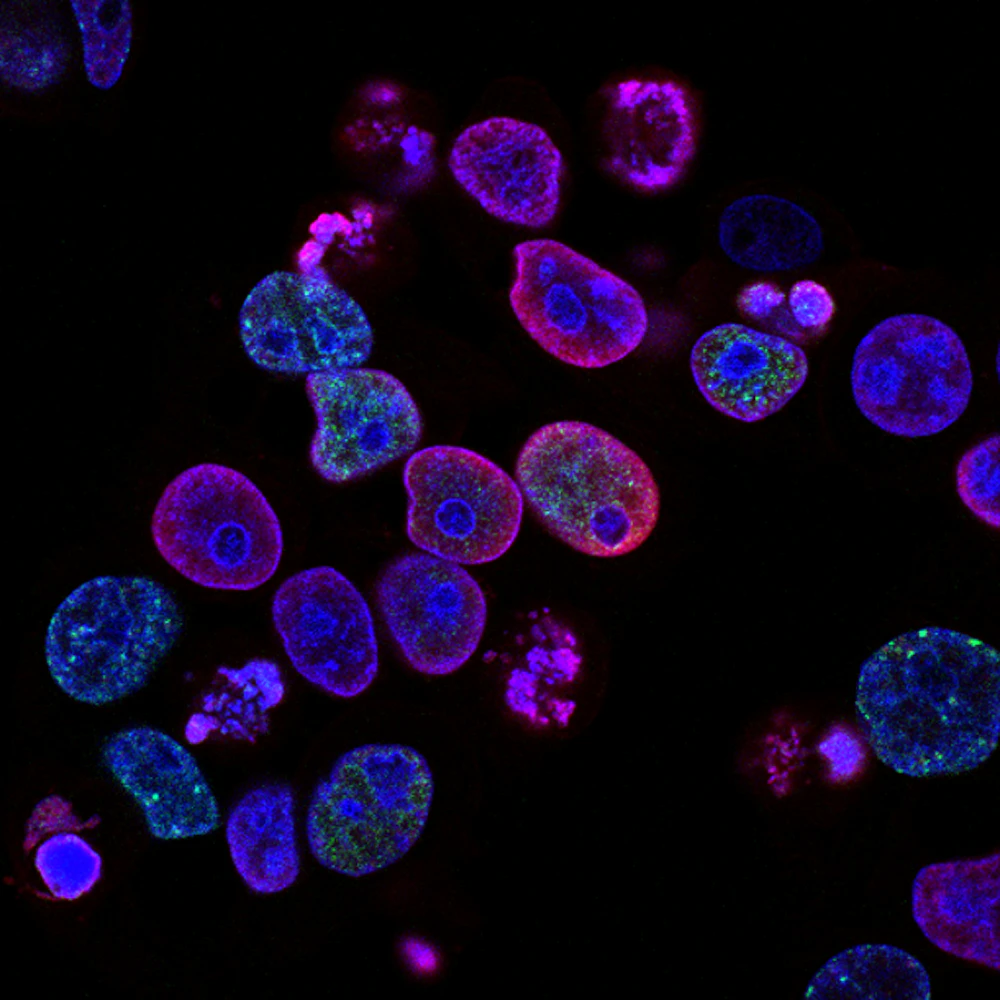
The primary use of AHK-Cu in modern trichology is the treatment of hair thinning. Research suggests that this peptide specifically targets the dermal papilla cells, which are located at the base of the hair follicle. These cells are responsible for regulating the hair growth cycle and determining the thickness of the hair shaft.
AHK-Cu promotes the proliferation of these cells and prevents their programmed death (apoptosis). By stimulating the production of Vascular Endothelial Growth Factor (VEGF), the peptide encourages angiogenesis—the formation of new blood vessels. This increased blood flow ensures that the follicle receives the necessary nutrients and oxygen to maintain the anagen, or growth, phase.
Signaling Pathways and DHT Inhibition
While AHK-Cu does not directly block Dihydrotestosterone (DHT), it works to counteract the shrinkage of follicles caused by this hormone. It enhances the extracellular matrix surrounding the follicle, creating a more robust environment that resists miniaturization. This makes it an ideal adjunctive therapy alongside traditional 5-alpha-reductase inhibitors.
Dermatological Benefits and Collagen Synthesis
Beyond its reputation for hair care, the AHK-Cu peptide is a potent ingredient in anti-aging skincare. It primarily functions by stimulating fibroblasts, the cells responsible for manufacturing the structural proteins of the skin. Increased collagen Type I and III production is a hallmark of copper peptide application.
As the skin ages, the natural concentration of copper and signaling peptides decreases, leading to fine lines and reduced elasticity. AHK-Cu helps to bridge this gap by providing the necessary signals for tissue remodeling. It also exhibits anti-inflammatory properties, which can help calm irritated skin and promote the healing of minor wounds or sun damage.
Table 1: Technical Profile of AHK-Cu
| Property | Specification |
|---|---|
| Amino Acid Sequence | Alanine-Histidine-Lysine (AHK) |
| Molecular Weight | Approximately 340.4 g/mol (excluding copper) |
| Primary Target | Dermal Papilla Cells & Fibroblasts |
| Solubility | Water-soluble |
| Recommended Concentration | 100 ppm to 2000 ppm in topical formulations |
AHK-Cu vs. GHK-Cu: A Comparison
It is common for individuals to confuse AHK-Cu with GHK-Cu. While both are copper peptides, their biological priorities differ. GHK-Cu is often viewed as a general-purpose skin remodeling peptide with broad systemic benefits. In contrast, AHK-Cu is more specialized, particularly regarding its affinity for the scalp environment.
Studies have indicated that AHK-Cu may be more effective at stimulating the growth of human hair follicles in vitro than GHK-Cu. This is attributed to the specific amino acid sequence which mimics natural growth factors found in the hair bulb. For general anti-wrinkle benefits, GHK-Cu remains the standard, but for hair density, AHK-Cu is the preferred choice.
Table 2: Peptide Comparison
| Feature | AHK-Cu | GHK-Cu |
|---|---|---|
| First Amino Acid | Alanine | Glycine |
| Primary Application | Hair Loss / Scalp Health | Skin Texture / Wrinkles |
| Fibroblast Stimulation | High | Very High |
| Follicle Support | Optimized | Moderate |
Safety and Practical Application
When incorporating AHK-Cu into a regimen, stability is the most critical factor. Copper peptides can be sensitive to pH levels and may be deactivated if used simultaneously with strong acids, such as high-concentration L-ascorbic acid (Vitamin C) or Alpha Hydroxy Acids (AHAs). It is generally recommended to apply copper peptides at a different time of day than these exfoliating agents.
Most commercial preparations of AHK-Cu are topical serums or scalp foams. Because it is water-soluble, it absorbs best on clean skin or scalp. Users should look for products that specify the concentration of the peptide to ensure they are receiving an efficacious dose. Consistency is vital, as the hair growth cycle operates over months rather than days.
Key Takeaways
- AHK-Cu is a tripeptide complexed with copper, specifically designed for cellular signaling.
- It primarily stimulates dermal papilla cells to promote hair growth and thickness.
- The peptide supports collagen synthesis in the skin by activating fibroblasts.
- AHK-Cu is more targeted toward hair restoration compared to the broader GHK-Cu.
- Proper formulation and pH balance are essential for maintaining the peptide’s stability.
Frequently Asked Questions
How long does it take to see results with AHK-Cu?
Because hair growth cycles are slow, most users report visible improvements in hair thickness and reduced shedding after 3 to 6 months of consistent daily application. For skin benefits, changes in texture may be noticed within 4 to 8 weeks.
Can AHK-Cu be used with Minoxidil?
Yes, AHK-Cu is often used in conjunction with Minoxidil. While Minoxidil works as a vasodilator to increase blood flow, AHK-Cu provides the structural building blocks and signals for follicle health, potentially creating a synergistic effect.
Are there any side effects to using copper peptides?
Copper peptides are generally well-tolerated. However, overuse or using a concentration that is too high can lead to skin irritation. It is always recommended to perform a patch test before applying the product to a large area.
Is AHK-Cu a permanent solution for hair loss?
Like most topical treatments, the benefits of AHK-Cu are maintained through regular use. If the treatment is discontinued, the follicles may eventually return to their previous state, especially in cases of hereditary androgenetic alopecia.
